
In a world full of reckless and extreme monetary policy, Japan no doubt takes the cake.
The country has total debt of more than ONE QUADRILLION YEN (around $10 trillion) pushing its debt-to-GDP ratio to a whopping 224% – that puts it ahead of financial basket case Greece, whose debt-to-GDP is around 180%.
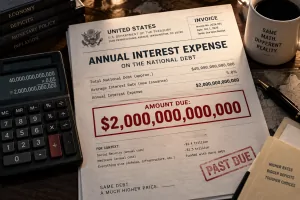
Japan spent 24.1% of its total revenue (appx. 23.5 trillion yen) last year servicing its debt – both paying down principal and interest. And that percentage has no doubt moved even higher this year.
And, keep in mind, this isn’t some banana republic. It’s the world’s third-largest economy.
The country’s economy is so screwed up that the Bank of Japan (BOJ), the central bank, has been conjuring trillions of yen out of thin air to buy government debt.
The BOJ printed yen to buy basically all of the $9.5 trillion of government debt outstanding. When it ran out of bonds to buy, BOJ started buying stocks. Now it’s a top 10 shareholder in 40% of Japanese listed companies.
Most recently, the central bank has started “yield-curve control,” which basically means they’ll do whatever it takes to make sure the government doesn’t have to pay more than 0.1% interest.
But something interesting has happened over the past few weeks…
Despite the BOJ’s promise to hold rates and bond yields down, the other owners of Japanese government bonds (JGBs) have been getting nervous. And they’ve been selling.
The selling pressure pushed bond prices down (and, inversely, yields and rates up)… In just under two weeks, yields on 10-year JGBs soared from 0.03% to 0.11% – an 18-month high.
If you own an asset and you don’t think it will perform well, you sell it. And clearly that’s how people feel about Japanese debt. The bonds pay close to zero, after all.
Japan has been fighting deflation for a long time. And with deflation, when the purchasing power of your money increases every year, you may consider holding a bond that pays close to zero… because you’re still maintaining your purchasing power.
But for the past decade or more, Japan has been committed to producing inflation. And now it’s getting inflation of around 1% a year (with a target of 2% annual inflation).
Now, anyone holding JGBs is guaranteed to lose money. And who in their right mind is going to hold an asset that guarantees you’ll lose money?
So people are selling those bonds. And yields are going up as a result.
Yields increasing from 0.03% to 0.11% may not sound like a big deal to you. But think about what it means for Japan…
The country already spends a quarter of its tax revenue just to service the debt. They cannot afford even the tiniest increase in interest rates.
And because bondholders are selling, and rates have been rising, the BOJ has intervened three times in a single week… buying up all the bonds people are selling in a desperate attempt to hold interest rates down.
This is a clear-cut case of BLATANT financial desperation.
And, to be honest, it’s a bit scary.
Japan is already in debt up to its eyeballs… but the BOJ is telling the world that they’re just getting started buying more bonds, no matter what the cost.
It’s crazy when you hear the most powerful economic policy makers in the world’s third-largest economy say that they’re going to hold interest rates down with ZERO consideration for the consequences.
It means they don’t care about fiscal responsibility, they don’t care how much they will plunder the power of people’s savings through inflation, or about their underfunded pensions struggling to generate returns. None of that matters.
The government’s only focus is to hold down interest rates… which they have to do to make sure Japan doesn’t go bankrupt.
If interest rates in Japan went to, say, just 1%, the nation’s annual debt service would literally exceed all of government tax revenue.
Here’s why this is a really big deal…
Remember how crazy things got in June, when some Italian finance minister didn’t get the job?
Markets around the world completely freaked out.
The potential downfall from what’s currently happening in Japan would be 1,000x worse. Remember, this is the third-largest economy in the world.
The Japanese government is fighting for its life right now (with absolutely ZERO concern for its other financial obligations). And it’s clear that they will spend whatever it takes to combat a rise in interest rates.
This won’t end well.
And it’s time to start loading up on the safest assets you can find.