Mark Zuckerberg had his hands full last week trying to calm the storm at his company.
In an employee conference call, he had to quell a great deal of panic over the company’s performance.
Growth at Facebook/Meta is slowing, the stock price is down, and the company is dealing with significant regulatory and economic headwinds. And workers are unsettled.
So Zuckerberg took the mic and tried to assuage those concerns by explaining to everybody why ad revenue growth is slowing.
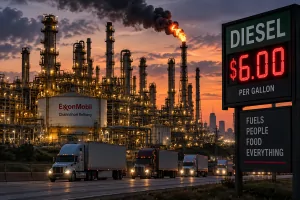
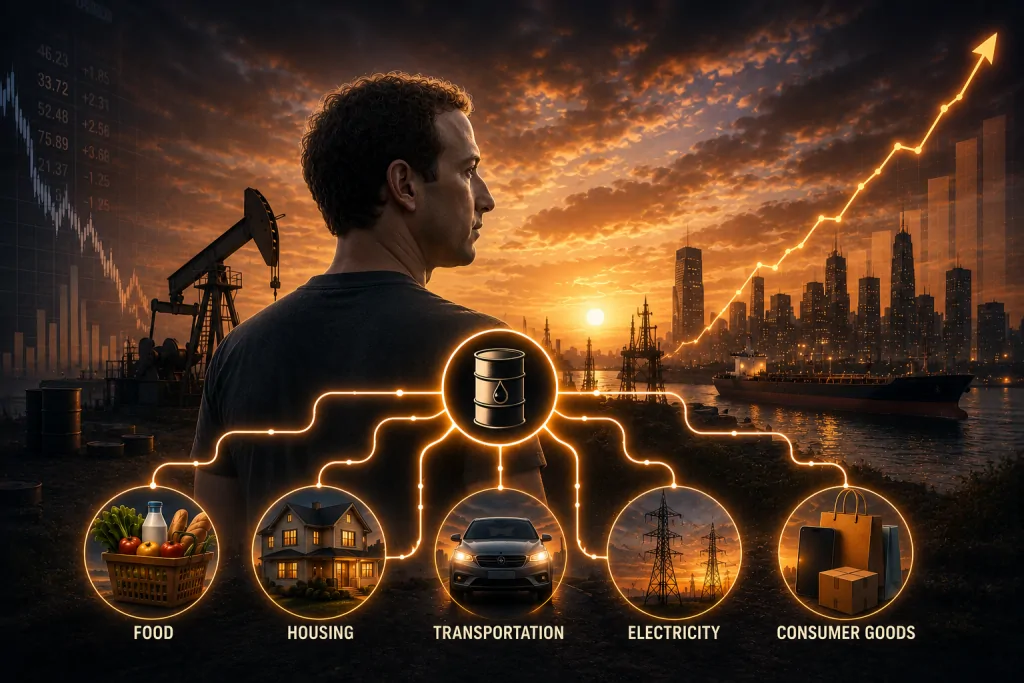
He said plainly, “If oil prices go up, then consumers spend more of their money on oil, on gas, and less on things that they would just buy that are kind of discretionary things that the advertising might serve.”
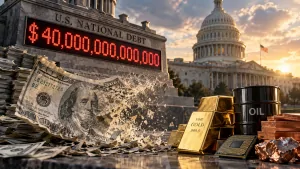
Without really meaning to, Mark Zuckerberg made a really strong case for real assets.
It ultimately starts with energy costs. Energy costs are higher. And everyone wants to blame Iran and the Strait of Hormuz, but this trend has been building for a long time.
For years, oil was the second most hated asset on the planet, only edged out by coal.
Think about it— liberal elites hold conferences where they fly to dictator states in their private jets, only to parade oil and gas CEOs on stage and publicly shame them.
Then you have the legions of inspired idiots who glitter-bomb art and glue themselves to pavement to stop traffic (ironically increasing emissions), all in the name of “just stop oil.”
They deface buildings and commit crimes, but they’ve been so successful that many oil companies themselves have turned their back on oil.
National governments, especially the previous Biden administration, have gone out of their way to tax, fleece, subvert, frustrate, and publicly ridicule oil companies.
Furthermore, the industry itself has been starved of capital because investors jumped on the bandwagon. Financial institutions stopped making loans, in some cases even debanking oil companies as a ridiculous form of virtue signaling.
Pension funds stopped investing in oil companies. Hedge funds tried to take over oil companies solely to turn them into fantasy green projects.
The dearth of capital— in a capital intensive industry— made it very difficult for exploration companies to finance new discoveries.
Even in the labor market, young people around the world have been so brainwashed that no one wants to go into the oil and gas sector— even though it pays quite well— for fear of public humiliation and “being on the wrong side of history.”
To be frank, it’s actually kind of extraordinary that an industry deprived of capital and labor, suffering an endless onslaught of media hysteria and political assault, has managed to continue delivering, day after day, the energy that our civilization requires to function.
Blaming today’s higher oil prices exclusively on Iran totally misses this history; the problems have been building for years.
Solving this energy challenge will take a long time— to finance new projects, find new discoveries, build the right kinds of infrastructure, and commercialize those discoveries in a way that keeps up with the rising energy demands of a growing world.
In the meantime, higher energy prices increase the production cost of just about everything else— food, housing, automobiles, consumer goods, even your monthly electricity bill. So, in the end, most things become more expensive.
This is ultimately what Mark Zuckerberg was saying— without fully saying it. For years there was an abundance of energy and global cooperation. Combined with low interest rates, the result was negligible price inflation and a feeling of widespread prosperity.
That feeling of prosperity meant consumers had plenty of disposable income for the sorts of things advertisers would sell on platforms like Facebook and Instagram.
As Zuckerberg explained, those same retail-focused companies are now selling to consumers and individuals who have less disposable income— precisely because they have to spend more money on essentials like energy and food.
We’ve been predicting this for the last several years, and we think this trend will continue for some time.
This is why a very sensible place to consider investing, even if just as a hedge against rising prices, is in the companies that produce these critical resources.
This is the core of our investment ethos, and to be frank, it has been very successful.
We’ve seen our mining stocks multiply by as much as ten times, with several others doubling, tripling, and quadrupling.
But it goes beyond mining; one agricultural company has doubled, and a fertilizer producer is up double digits in just a few months. We’ve been collecting dividends from industrial producers while their stocks tick higher.
Only a few companies we have researched are down, and we think they still have plenty of upside.
And we are still finding some really great real-asset businesses that are surprisingly, deeply undervalued. That includes energy companies.
There are a lot of reasons for high quality businesses being undervalued; but I think it’s because people believe this is some sort of aberration— that tomorrow the spigots turn on and oil drops back to $40 a barrel.
The reality is all these challenges can be solved, but it’s going to take a while. And in the meantime, we think these real-asset companies are going to be cash machines.