[Editor’s note: This letter was written by Schiff Sovereign’s CEO, Viktorija, who is originally from Lithuania but splits her time between Mexico and Panama.]
The first time I came to Panama was about 16 years ago, and I felt like someone was always yelling… either yelling at me, towards me, through me, about me…
The place felt chaotic (in an irritating way) and loud, with construction zones on every other block. And the traffic was enough to drive a Zen monk completely insane.
There are places I’ve been to in the world that I fell in love with immediately. Capetown, South Africa is one of them. Japan. The Croatian coastline.
Panama was on my rolling-eyes-can’t-wait-to-leave-at-first-sight list. And I never would have imagined splitting my time between Panama and Mexico. That’s how much I disliked it.
Back then, the Panamanian government was practically handing out residencies. It was one of the easiest places in the world to get legal residency– a real Plan B option on paper. But personally it just wasn’t for me. That was in 2010.
Yet, over the years, Panama kept appearing in my itinerary. A layover and a cancelled flight that stretched into a multi-day stint. Another connection that turned into a week’s stopover.
Each time, I’d meet more people, see a different part of the country, and quietly recalibrate my thoughts. The place was changing— and I’ll admit I had been too dismissive early on to notice the potential.
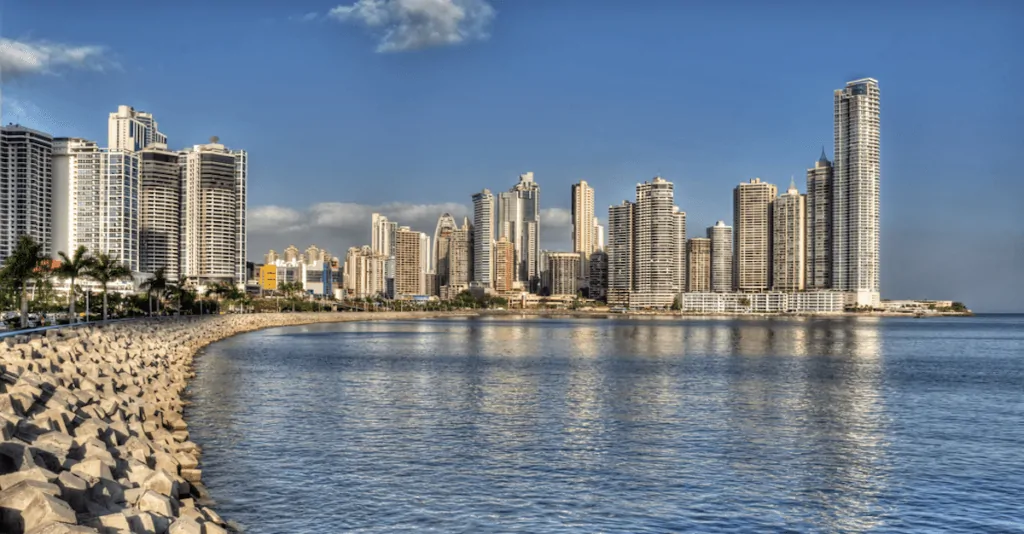
Panama 16 years ago was simply not the Panama that exists today. The country kept growing, kept modernizing, and kept attracting serious people. Internationally connected professionals, entrepreneurs, retirees who’d done their research and figured out that their money goes significantly further here than back home.
Infrastructure improved. The expat community deepened. And somewhere along the way, slowly and without much fanfare, Panama earned my respect.
One of the obvious benefits today is that Panama is one of the few spots in the Americas where you can still buy a modern, elegant home in a safe, dollar-based, tax-friendly country. And home prices are quite modest compared to the US.
Property is a good deal. And foreigners can own it outright without restriction.
Plus, in Panama, the right property purchase can qualify you for residency— status that gives you the legal right to live, work, and invest.
We think of a foreign residency as an insurance policy: the right to pick up and go somewhere stable if your home country stops feeling right.
Depending on what country you are from, any Panamanian property in the $200,000–$300,000 range is enough to qualify you for residency.
But real estate isn’t the only way in. Panama has built some of the most accessible residency programs in the world, with pathways for investors, professionals, and people living on independent income. There’s a door here for almost everyone.
The residency Panama is best known for is built for retirees—and it reflects something most countries still haven’t figured out: retirees are worth attracting.
The “Pensionado” visa has been around for decades and remains one of the most generous residency programs in the world. The qualification threshold is modest, requiring only a lifetime pension or annuity income of around $1,000 per month.
And once you have it, Panama actually gives you a permanent discount card for the rest of your life— meaningful cuts on everything from flights and restaurants to medical care and entertainment. The country isn’t just tolerating retirees; it built an entire incentive structure to keep them happy. That’s rare, and it’s smart.
But Panama isn’t just a lifestyle destination. It’s a legitimate financial center.
Despite what people might think about the country’s past financial issues, Panama is now the largest banking hub in Latin America. Bank failures are few, and nearly every institution is well-capitalized and liquid.
Foreigners can open a solid bank account here in US dollars (which Panama uses as its official currency). Surprisingly, service is quite good. I have an account at a private bank (the account minimums are trivial for foreigners) and I personally WhatsApp with my banker for anything I need.
For anyone thinking seriously about financial diversification, this is a useful box to tick.
And then there’s the piece that I find even more interesting: physical asset storage.
Panama has developed a small but serious industry of private vault facilities for precious metals and other tangible wealth.
I’ve visited some of these personally— sat down with the owners, walked through the operations— these are facilities built to serious international standards: multi-layer physical security, reinforced construction, full insurance, and total privacy.
In short, this is not a country where you park money and assets because you have no better option. It’s a country that sophisticated people increasingly choose on purpose.
P.S. A few weeks ago, we sent our Plan B Confidential members a detailed report on real estate opportunities in Panama— properties that work not just as Plan B infrastructure, but as genuine investments in a country that has quietly appreciated for a decade. If you’re not a member yet, now’s the time to take a closer look.
Here’s an added reason: on September 18–19, 2026, we’re hosting a conference right here in Panama City— two days on residency, international diversification, and the practical moves that actually matter, spent around people who ask the same questions you do. It’s normally open only to Total Access members, but join Plan B Confidential now and you can attend too.