New York City’s socialist mayor, Zohran Mamdani, was asked a pretty simple question at a conference a few days ago.
The journalist Andrew Ross Sorkin asked Mamdani about his plan to open city-owned grocery stores that sell food at a 30% discount; Sorkin point out the obvious— that grocery stores typically make a tiny profit margin of between 1% and 4%.
So how does Mamdani plan on cutting prices by a whopping 30%??
“How is this going to work at all?” Sorkin asked, rather incredulously. He then asked Mamdani to “walk through the math” and explain how he was going to make it all work.
“It’s going to be subsidized,” Mamdani said. In short, his city-owned grocery stores will lose money… and taxpayers will subsidize the losses.
Naturally Mamdani will try to get those taxpayer funds from other sources… so that a farmer from upstate New York or a retired engineer in Florida will subsidize his kosher hot dogs and halal meat selection.
Then Mamdani flipped the question around and said, “let’s take a step back. . .”
This, of course, meant that he wasn’t going to directly answer the question or provide a detailed explanation of the numbers, and instead wax philosophically about the struggles of New Yorkers.
“When you were saying, ‘Explain the math to me,’” he told Sorkin, “that’s the question that New Yorkers are asking themselves every day when they go to the grocery store.”
Spoken like a true politician. And like most master politicians, Mamdani can clearly identify the problem.
Thanksgiving is Thursday, and according to the American Farm Bureau’s annual survey, the classic dinner costs about 6% more than it did last year. The turkey alone is up 10%.
So how DOES the math work? Why does the same cart of food cost so much more than it did a few years ago?
It’s a combination of government spending and self-destructive policy.
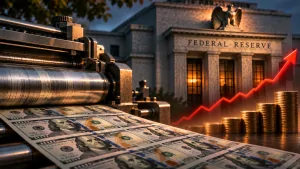
The government spends trillions of dollars it doesn’t have… and some of that money ends up being created out of thin air by the Federal Reserve. So when the supply of US dollars circulating in the economy goes up… but the number of turkeys available for slaughter remains the same, the net results is higher turkey prices. It’s pretty simple.
In addition, the government piles regulations on top of regulations which add to the cost.
For example— Section 311.20 of Title 9 of the Code of Federal Regulations states that “swine which gives off a pronounced sexual odor shall be condemned”, while a “sexual odor [that is] less than pronounced may be passed for use in comminuted cooked meat food product. . .”
This is an actual rule passed by the federal government. Just imagine being the guy in a meat processing plant sniffing for sexual odors and having to categorize it as “pronounced” versus “less than pronounced”.
Then ask yourself if a rule like this makes meat more expensive or less expensive.
Then imagine literally thousands upon thousands of similar rules, each piling on additional costs that are passed on to consumers.
Politicians keep storming to power by promising, “I am going to bring your living costs down.” Mamdani was one of the originals… and voters just swept in a whole bunch more earlier this month.
But both the politicians and the constituents who voted for them seem to think the government can simply legislate lower turkey (or swine) prices.
They can’t. That’s not how it works.
Even high school students know about supply and demand. Governments essentially make supply far more difficult through excess regulation… then boost demand through tax subsidies (like Comrade Mamdani’s plan).
The end result of reduced supply and increased demand means higher prices…
Mamdani’s grocery stores won’t bring prices down. They’re just a transfer of wealth from the people who pay taxes to the people who shop there… or to the scalpers who will buy up all the cheap turkey and resell it at a profit.
That’s what happened in Venezuela a decade ago, when subsidized groceries ended up on the black market at a markup of 400% to 500%.
Meanwhile, the private grocer down the street makes a few pennies of margin per dollar of sales… yet he has to compete with a government-owned store that never needs to turn a profit and enjoys generous subsidies.
Mamdani’s cure is really the disease. More government spending. More self-destructive policy.
He has already run this experiment with housing, and it also backfired.
Back in June, his own rent board voted to freeze the rent on nearly a million apartments.
The board’s own numbers showed that the cost of running those buildings rose more than 5% this year. Insurance and fuel were up by double digits.
Landlords’ income is frozen, yet their costs soared. So many of them simply stopped renting. End result? Fewer units available for rent, and New York’s housing shortage worsened.
Now he wants to do the same with food.
Neither voters nor the politicians they elect seem to understand any of this. And until they do, living costs will continue to rise.
And that’s exactly why it makes sense to have a Plan B.
P.S. You can’t make a politician understand a problem he’s convinced he’s solving.
But you can give yourself options. Plan B Confidential, our flagship research service here at Schiff Sovereign, covers how to build a Plan B: legal residency abroad, foreign bank accounts, legal tax strategies, and real assets that hold their value no matter who’s in power.