When you think of hyperinflation, you might picture Zimbabwe’s trillion-dollar bills, or wheelbarrows full of cash in the streets of 1920s Weimar Germany.
More recently, Venezuela’s currency collapsed under the weight of runaway printing, and Argentina has spent decades lurching from one inflation crisis to another. Throughout history, inflation isn’t an exception—it’s the norm.
Poland is among the many countries which suffered its own bout of inflation in 1989 and 1990, triggered by the same familiar mix of government mistakes: massive deficits, political dysfunction, and a central bank used as a printing press.
In 1990 alone, prices in Poland jumped 586%. The złoty, Poland’s currency at the time, collapsed. One American professor living in Poland at the time said a monthly bus ticket cost what an entire summer cottage had ten years earlier.
This was the inevitable result of decades of command-and-control economics.
After World War II, Poland remained independent in name only. Soviet troops never left. The Communist party ruled with Moscow’s blessing. Private property was abolished. Prices were fixed by decree. Farms were collectivized. Dissent was criminal.
To keep the illusion of prosperity going, the government promised everything to everyone—jobs, housing, healthcare, cheap food—and paid for it with money it didn’t have.
When tax revenues fell short, the central bank simply printed more. But paper currency can’t conjure real goods. The result was shortages, black markets, and, eventually, total currency collapse.
That’s the world Adam Glapiński—current President of the National Bank of Poland—grew up in.
Born in 1950, he watched his savings inflate away throughout his early career.
Having fought as part of the anti‑communist underground and witnessed the country’s currency unravel in the early 1990s, Glapiński isn’t simply a technocrat—he’s someone determined to protect Poland from repeating its past.
That’s why he’s gone all in on gold.
And he’s part of the reason that Poland is one of the healthier economies in Europe. (Another is that Poland is one of the only places that hasn’t sacrificed itself on the altar of multiculturalism.)
But they still have a problem: a significant portion of their strategic reserve assets are denominated in US dollars.
And Glapiński has been rightfully concerned. Because when you’ve lived through a currency collapse once, you start paying close attention to the early warning signs.
He’s looking at the United States today and doesn’t like what he sees. The deficits keep climbing. The national debt keeps exploding. Interest expense has now surpassed military spending. Social Security is projected to run dry in just seven or eight years.
And the only thing both parties can unite for is to chase anyone trying to solve these problems out of town— like Elon Musk and his work with DOGE.
Glapiński’s not stupid. He can see the Federal Reserve cutting interest rates, even as inflation ticks up. He sees it ending quantitative tightening early, and gearing up for more quantitative easing— AKA money printing.
He can also see a point—relatively soon—when the US dollar is no longer the world’s dominant reserve asset.
The endgame is clear: the value of US dollar reserves will decline.
So he’s been trying to get ahead of it.
But what other strategic reserve asset is there for a central banker to buy?
Not the Chinese renminbi—you can’t trust their lack of transparency, manipulated numbers, and massive debts.
Not the British pound—Britain’s a fiscal and political mess.
Poland will hold some euros, sure, but the euro-zone has plenty of structural problems of its own.
Gold is the best option left.
Not because Glapiński is a gold bug— this is a completely rational move.
Gold is one of the only assets with a large enough market that you can invest tens of billions of dollars. Then, you can hold it within your own borders, free of counter‑party risk. You don’t get that benefit if you’re holding another government’s bonds, which can be defaulted on, frozen, or weaponized as the US has shown.
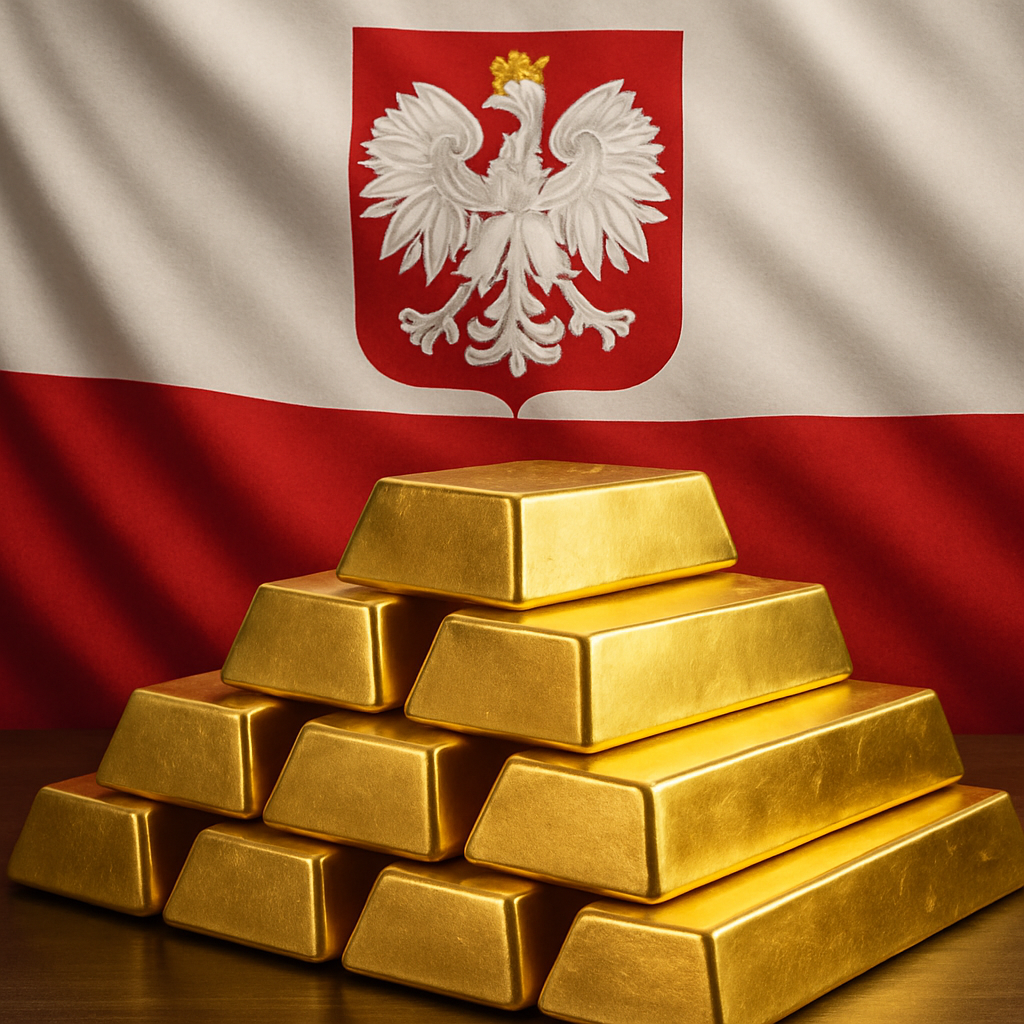
Glapiński’s target was for the National Bank of Poland to hold 20% of its reserves in gold.
But when they hit that target, he raised it to 25%… which they also recently hit.
And now he’s pushing for 30%.
There are two main things to understand about this.
One, he’s far from alone.
Countries like Russia, China, and other usual suspects are buying literal tons of gold, largely because they don’t want to be frozen out of their US Treasury holdings.
But its not just them. It’s also Kazakhstan, Bulgaria, El Salvador— central banks around the world are buying way more gold than usual.
As recently as 2010, central banks added a grand total of just 79 tons of gold to their reserves.
In 2024, they added a cumulative 1,089 tons. And that’s been the trend—1,000 tons per year—since 2021. That’s about double the previous decade’s average.
The second thing to understand about demand from central banks is that they are relatively price insensitive.
They’re not buying gold to speculate and sell later for more dollars. They’re buying it to diversify away from the dollar.
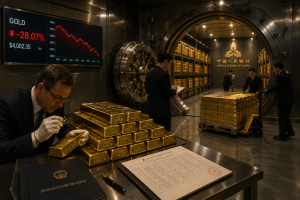
While they may try to time certain purchases to go further, they’re not going to let $4,000 per ounce gold change their overall reserve strategy.
They know they need to continue buying gold for one simple reason: they’re losing confidence in the US government.
And that demand alone is probably enough to continue to push prices even higher.