There are pools of capital in the world so large that they cannot be parked just anywhere.
Pension funds, foreign governments and central banks, giant commercial banks— they are collectively sitting on tens of trillions of dollars worth of capital that they have to invest in a safe, stable asset.
The stock market doesn’t really work— it’s far too volatile. Real estate doesn’t really work either— it’s not liquid.
That is where the bond market comes in: it’s both massive (far larger than the stock market), so it can absorb enormous flows of capital. And it’s highly liquid. This allows large investors to quickly move huge sums of money in/out of the bond market.
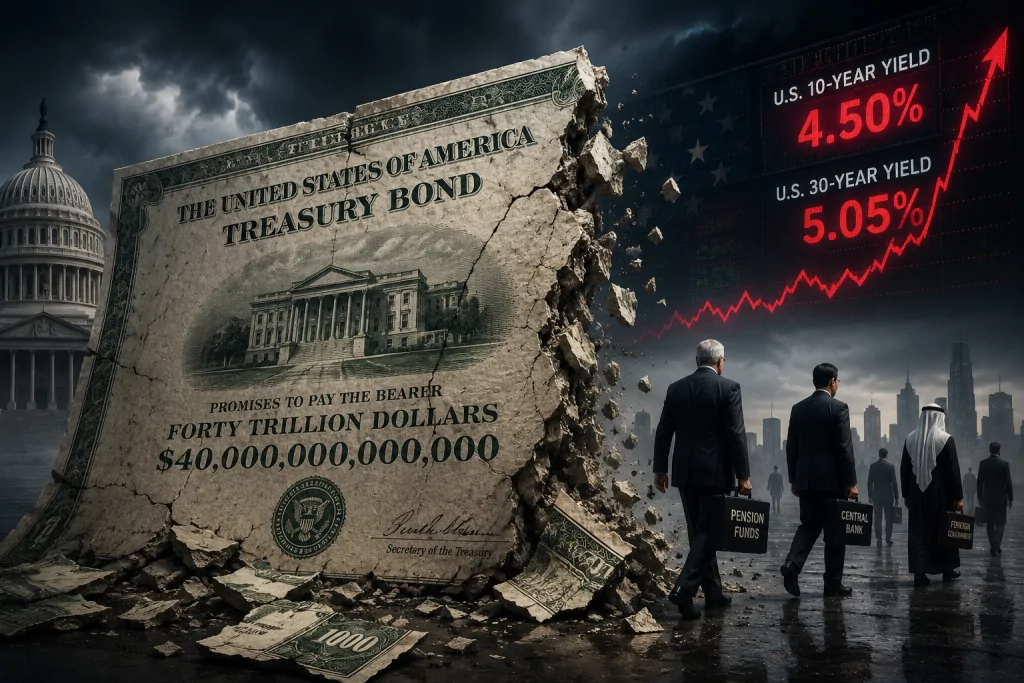
That’s why, for the better part of a century, the single deepest and most trusted piece of that market has been US government bonds. With the US national debt of nearly $40 trillion, this makes America’s bond market REALLY big. And Congress keeps adding to it.
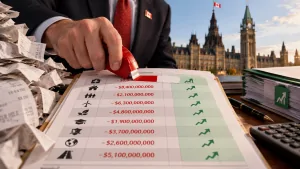
The federal government runs roughly $2 trillion annual deficits— which you could think of as the new ‘supply’ of Treasury securities added to the bond market each year.
In other words, when the government spends more, they have to borrow more money by issuing more Treasury bonds. So the supply of US Treasury securities in the bond market increases.
‘Demand’ for US government bonds, on the other hand, comes from everyone on the planet who buys them. Pension funds, foreign governments and central banks, big corporations, banks, money market funds, etc.
And as any high school economics student can tell you, the ‘price’ is where supply meets demand. In the bond market, we usually think of price as the bond yield, e.g. right now the US 10-year yield is 4.5%, and the 30-year Treasury is over 5%.
To put those yields in a historical context, they haven’t been this high in decades— and it’s a direct result of rising supply and waning demand.
On the supply side, the US government keeps borrowing money at an insane pace, i.e. the Treasury Department keeps flooding the market with more and more bonds, notes, and yields.
But on the demand side, investors are backing off— especially foreigners. Foreign ownership of US government bonds (as a percentage of total public debt) has fallen by roughly HALF since the early 2010s… with a significant drop recorded just over the past twelve months according to the Treasury Department’s own data.
Few people in Congress seem to mind; there is no serious discussion in Washington about slowing the growth of the deficit, i.e. the bond supply, let alone actually shrinking supply by paying off debt.
Ultimately this supply and demand imbalance means that bond yields will continue to rise— which affects just about everything else from auto loans to the 30-year mortgage rate.
And just take a look around the rest of the developed world:
Bond yields in Germany are far lower (by about 1.5%) than US yields. So are yields in Japan, France, Italy, Canada, Singapore, New Zealand, South Korea, and China.
Even GREECE, with its 3.6% 10-year government bond yield, has lower yields than the United States.
You’d think that such attractive yields in the United States compared to the rest of the world would entice a lot more capital into the US bond market. After all, investors generally chase the highest returns.
But buyers are signaling that they don’t think the return is worth the risk— that even a 4.5% yield on a 10-year Treasury note is not worth the risk of holding a US government IOU for an entire decade.
Think about how much has changed over the past decade… and how much more can change over the next decade. Inflation, government shutdowns, debt ceiling showdowns, political theater, war, Social Security’s looming insolvency, etc.
Foreign governments and central banks aren’t willing to lock themselves in for ten years, let alone thirty years, with so much chaos on the horizon.
And with less demand from foreigners in the bond market, it’s likely that bond yields will continue to rise, until the Treasury Department is paying 5, 6, and 7% to borrow money.
With a ~$40 trillion national debt, that’s almost $3 trillion per year just to pay interest— roughly 60% of last year’s tax revenue.
This is why it makes so much sense to have a Plan B… because the most likely ‘solution’ to this problem will be for the Federal Reserve to ‘print’ trillions of dollars of capital.
This approach may succeed in lowering yields. But it will lead to substantially higher inflation, for a lot longer.