[Editor’s note: This letter was written by Schiff Sovereign’s CEO, Viktorija, who is originally from Lithuania but lives in Mexico.]
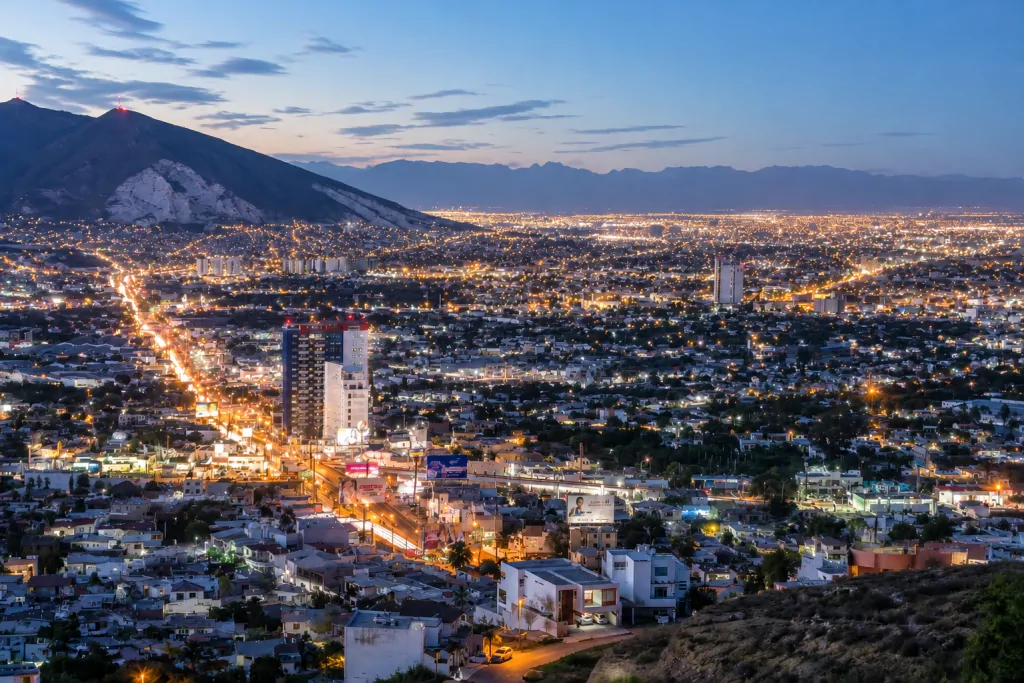
I’ve landed in a lot of cities. Most of them take a day or two before they show you who they really are. Monterrey, Mexico showed me in about fifteen minutes– on the highway, before I’d even reached the hotel.
On both sides of the highway, as far as you can see: business parks, industrial parks, factories, logistics hubs.
Coca-Cola (or more precisely, FEMSA, the largest Coca-Cola bottler in Latin America) is headquartered here.
LEGO (yes, the ones you step on in the middle of the night if you have kids) operates its largest manufacturing facility in Monterrey.
There are also plenty of car manufacturers; in fact, this week I’m visiting a major brand’s automotive plant.
Bottom line, Monterrey makes things. Lots of things. Real things. Physical things. And not just useless knick-knacks and trinkets– the kinds of things that people and businesses actually want– things which fill shipping containers and cross borders and end up in people’s homes.
I was last here about seven years ago in the same part of town. Now I barely recognize it.
That’s not entirely surprising when you know the data. Monterrey is consistently ranked as the wealthiest city in Mexico – and it’s not close. This is a city that has been compounding quietly for a very long time.
Steel, glass, cement, beer– these industries built Monterrey’s original wealth in the 20th century.
The old Fundidora steel mill, which once defined the skyline, has since been converted into a park. That’s what a city looks like when the first wave of industrialization is already in the history books and the second wave is already underway.
And that second wave, in case you haven’t been following, is “nearshoring”; companies that spent decades manufacturing in Asia are quickly relocating supply chains closer to the US border.
Monterrey, just south of the Texas border– is one of the clearest answers to where.
Bosch opened a new production facility here in 2024. Unilever committed $960 million to a new plant as recently as April 2025.
Tesla announced plans for a Gigafactory near the city; that project is currently on pause while US-Mexico tariff politics play out, but the fact that Tesla chose this city tells you something about what the world’s most prominent manufacturers think of Monterrey.
People who’ve spent time in China’s industrial corridors will feel something familiar here. Not the aesthetics; Monterrey is very much its own place, very much Mexico.
But the energy is comparable: cranes on the skyline, trucks on the roads, and the sense that somewhere nearby, someone is signing a lease on a new factory floor.
The streets are clean, organized, more developed than most people picture when they think of northern Mexico. It’s the most industrialized and most westernized city in this country, and that didn’t happen by accident.
I think about economic growth a lot; it’s a big part of my job at Schiff Sovereign. And I’ve learned to distrust what the ‘experts’ say with statistics and press releases.
Governments can juice their economies by dumping tons of subsidies… and the end result is ghost cities or (as we wrote about yesterday) billions of dollars in losses on EV plants because no one wants to buy the cars.
Here you can feel the economic growth. It’s in the air. You can smell it as the trucks go by carrying construction materials for a new building that was pre-leased three years ago and already has factory orders.
You can hear it– in regular conversations as people here talk business and close deals as they race from meeting to meeting. It’s part of the fabric of this town now.
Monterrey is not a city chasing investment. The investment is already here. Capital came to Monterrey, liked what it saw, and brought plenty of its friends.
And then there are the people. I almost forgot this part. People in this town are genuinely, disarmingly warm. They open their homes to you. They want to show you their favorite places, introduce you to their city the way they actually experience it – not the version in a guidebook, but the real one.
There’s a pride here that isn’t boastful, just generous. They want you to see what they see. That’s a rare quality in a city this driven.
It’s not for everyone– I’ll be honest about that. If you’re looking for beaches, colonial architecture, or a laid-back expat scene, keep looking. Monterrey is a city for builders and producers. It’s also blazing hot right now, and I’m suffering.
But there is a certain intensity; it isn’t romantic in the traditional sense, but it is exciting if you’re wired a certain way.
I am wired that way. And if you are too, this city is worth checking out.