Earlier this year, Paramount agreed to buy Warner Bros. for $110 billion.
As with any merger that size, the US Justice Department reviewed it to make sure it wouldn’t hurt competition or consumers. Federal regulators approved the deal a few months later, and that should have been the final hurdle.
But not in the State of California.
California’s Attorney General Rob Bonta decided to insert himself into the transaction, arguing that the merger would mean higher prices and fewer movies in theaters. Bonta is a lawyer and career politician… but apparently he has some special knowledge about the film industry that no one else possesses.
And so, by July of this year, Bonta had decided that out of all the other problems on his desk— massive violent crime, fentanyl deaths, uncontrolled fraud— the one issue that needed his attention the most was a movie studio merger.
Paramount asked Bonta what it would take to make him happy. The company offered a binding commitment to release 30 films per year in theaters, and to keep both of its Los Angeles studio lots open. Bonta wouldn’t even engage in negotiations.
Instead he sued Paramount to block the deal. “There is no debate here,” he said.
Asked about reports that Paramount might leave California over the fight, he called it “a desperate last-ditch effort to try to blackmail my office.”
A week later, a judge froze the merger.
But the real risk his lawsuit created was for Californians. Paramount is the last major studio still headquartered in Hollywood, and Bonta was giving it every reason to take its headquarters, its jobs, and its taxes to another state.
And that’s what Paramount started to do: move.
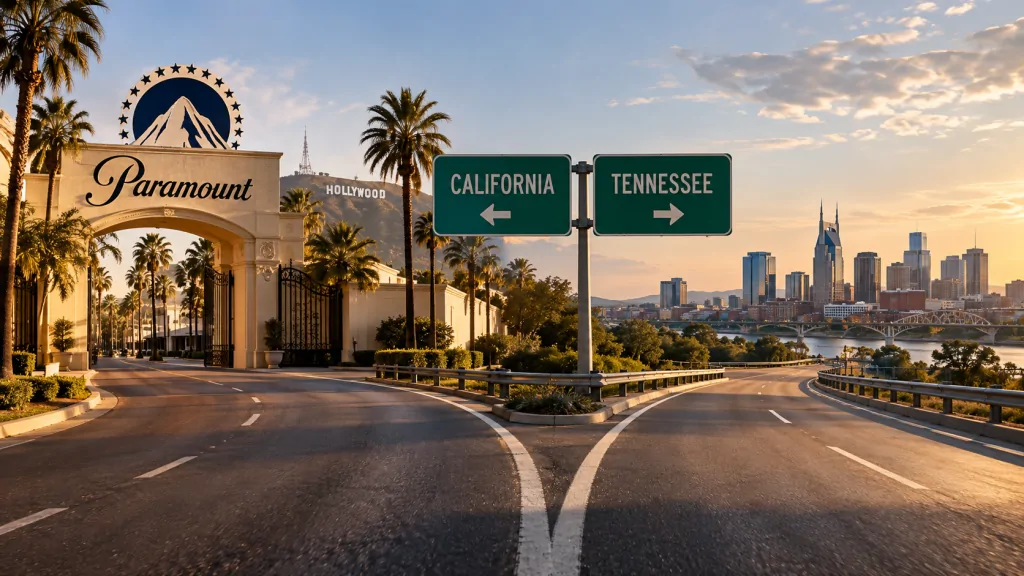
State officials in Tennessee wrote to Paramount CEO David Ellison and invited the company to move there. Paramount’s board signed off on a relocation plan, with the headquarters going first.
They event started shopping for 400,000 square feet of office space in Nashville.
It was literally a Plan B for Paramount. And they worked swiftly to build it.
Ellison then set October 1 as the deadline for a settlement; either California would negotiate, or Ellison would leave the state.
So at that point they had both their Plan B (a relocation to Tennessee) AND a clear red line under which circumstances they would execute it (no settlement by October 1).
This is really a great example for how to think about a Plan B: Paramount decided in advance that they would leave California if the state rejected their Warner Bros. acquisition. The company knew exactly where it would go, and identified the specific instance that would set the whole plan in motion.
Attorney General Bonta called it “blackmail”. But he’s an idiot who has never run a private company in his life. Honestly, he’s such a moron that he thinks he can freeze a perfectly legal and valid deal, sue a company, insult the executives… and still expect them to remain in the state.
Eventually Governor Gavin Newsom had to step in… a moron in his own right, but smart enough to realize that Paramount was actually going to leave. Newsom also realized that Bonta would almost certainly lose the lawsuit and come away with nothing.
So the governor pushed his own attorney general aside and worked behind the scenes to get a deal done.
Last week, with Paramount’s deadline just days away, California finally settled. Paramount now expects to close the merger within weeks.
And what did Bonta get for all of the trouble he caused?
Paramount agreed to spend an extra $1.5 billion on US production over five years. That’s $300 million a year, a big fat 1% on top of the roughly $30 billion a year it already spends on content.
It also agreed to keep both studio lots open and release the same 30 films a year it offered before he sued. So essentially no real additional benefit.
Bonta tied up months of time in federal court, all on state taxpayers’ dime, haggling over how many movies Hollywood should release each year. They ended up with essentially the deal Paramount offered before the lawsuit, plus 1% additional spending on movies.
It’s genius.
But Paramount was in the driver’s seat because the CEO had a Plan B. He could see the writing on the wall and recognized that he needed another option if things continued to get worse in California.
It’s a great way to think about risks and having a Plan B, and the thinking doesn’t change with size: decide in advance where your red lines are, and put the pieces in place while things are calm.
This includes options like having a second residency already lined up or legally approved (just like Paramount’s proposed move to Tennessee). That second residency might be out of state, or even out of the country.
Other options include having some assets outside of your home jurisdiction— like a foreign bank account, or even precious metals stored abroad.
This way, if your red lines get crossed, you’ll already know exactly what to do, and be able to execute with ease.
P.S. Understanding and executing on your options is exactly what our Plan B Confidential service is for. Every month it covers second residencies and citizenships, foreign banking, and legal tax strategies, with boots-on-the-ground reports from more than 120 countries and a Rolodex of vetted service providers for when you decide to act.