On May 20, 1862, Abraham Lincoln signed the Homestead Act into law, and it essentially said: here’s 160 acres of land. It’s yours. For free. All you have to do is live on it and improve it.
And between 1862 and 1934, the federal government distributed 270 million acres under the program — roughly 10% of all the land in the United States.
Even as far back as the American Revolution, the Founding Fathers understood that property ownership made people more engaged, more productive citizens. Ownership meant that you had a vested financial interest in your community… and your country.
Over time, that idea fused with the concept of “the American Dream”. And for decades that dream was a reality for millions of people.
After World War II, for example, America underwent a massive construction boom. Between postwar prosperity, the GI Bill, and the arrival of the modern 30-year fixed mortgage, home ownership surged from about 44% in 1940 to 62% by 1960.
More importantly, housing was affordable.
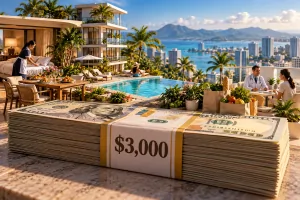
In 1950, median family income was about $3,000, yet the median home cost roughly $7,350. That’s just ~2.5 times median household income. Plus, with prevailing mortgage rates back then 4.5%, the monthly payments were trivial.
Because of that, families across America could easily make ends meet on a single income.
Today the median home sells for about $412,000. Median household income is roughly $83,700. That puts housing at 5x household income— double what it was in the 1950s.
More importantly, at today’s mortgage rate of roughly 6.4%, the monthly payment on a median home (assuming a 20% down payment) consumes roughly 30% of household income.
The down payment is also so high these days that buying a home is nearly impossible, especially for young people or low-income workers. Even in dual-income households, homeownership is increasingly out of reach.
As we discussed on Friday, America’s housing problems go far beyond the ‘greedy’ Wall Street investors that are getting most of the blame for rising home prices.
Construction materials cost 40% more than they did five years ago, courtesy of the Federal Reserve printing trillions during the pandemic and igniting inflation.
Plus the regulatory permitting maze adds enormous costs. In Fremont, California, development fees alone run $157,000 per home before a single nail is hammered. And that doesn’t even include additional permitting costs and utility connection fees.
The government used to give away 160 acres for free. Now local governments charge six figures for permission to build.
Go figure that California, with its endless lip service about affordable housing, is also the epicenter of American homelessness.
But it turns out there’s a ready-made solution staring policymakers in the face.
The office property market is a complete bloodbath right now. Between the sluggish economy, AI reducing demand for workers, and the lingering work-from-home paradigm, the prices of office properties across the country have tanked.
More than 200 distressed office buildings changed hands across the country in 2025, with average sale prices down 37% from 2019. In Manhattan, a 920,000-square-foot tower sold for $8.5 million, down from $332.5 million. That’s a 97% decline!
Then there’s 401 South State Street in Chicago, a 485,000-square-foot office building that sold last October for $4.2 million, down from $68.1 million in 2016. That’s less than $9 per square foot.
Housing in Chicago isn’t cheap. So just imagine you’re young, fresh out of college, and staring at the prospect of paying $1,200 per month to live in a cramped apartment with three roommates.
Instead, you could pay about $13,000 for 1,500 square feet worth of space in the 401 South State Street office building that would be yours to own.
Yes, duh, it’s an office building. So it wouldn’t have the conveniences of a traditional home— like private bathrooms and kitchens. But for $13 grand?!!? Who cares. You’d have your own private space, a roof over your head, and a door that locks.
Frankly, that’s not so different from military barracks and university dorms. Americans manage just fine with communal facilities when the price is right.
That’s the beauty of capitalism. Such living accommodations aren’t for everyone. But at a low enough price, a LOT of people would happily trade convenience for affordability. Shower at the gym. Eat at the fast-casual spot around the corner. Live with walking distance to work downtown.
Most 20-somethings might think that’s pretty cool— especially compared to the alternative of paying out the nose for rent and never managing to save enough money to buy a house.
Same logic for a family of six crammed into a two-bedroom public housing unit in decrepit conditions; they could have a few thousand square feet to themselves.
Here’s another scenario. Let’s say a family in Topeka, Kansas locked in a 2% mortgage during the pandemic. Dad got laid off and can’t find another job locally. But they don’t want to sell the house to move across country, uproot the kids, and buy a new house somewhere else at a 6% rate. So they’re stuck.
Instead, Dad buys 1,000 square feet in one of these bankrupt office buildings for less than $10k. His family stays home, he commutes to his new job in a new city, and flies home on the weekends to see his kids. They make it work… which they wouldn’t be able to afford with hotels or an AirBnb.Posted on April 14, 2026
This would be a genuine ‘starter home’— a place where someone could actually save money and build toward a proper mortgage, instead of hemorrhaging rent to Blackrock every month while still falling behind.
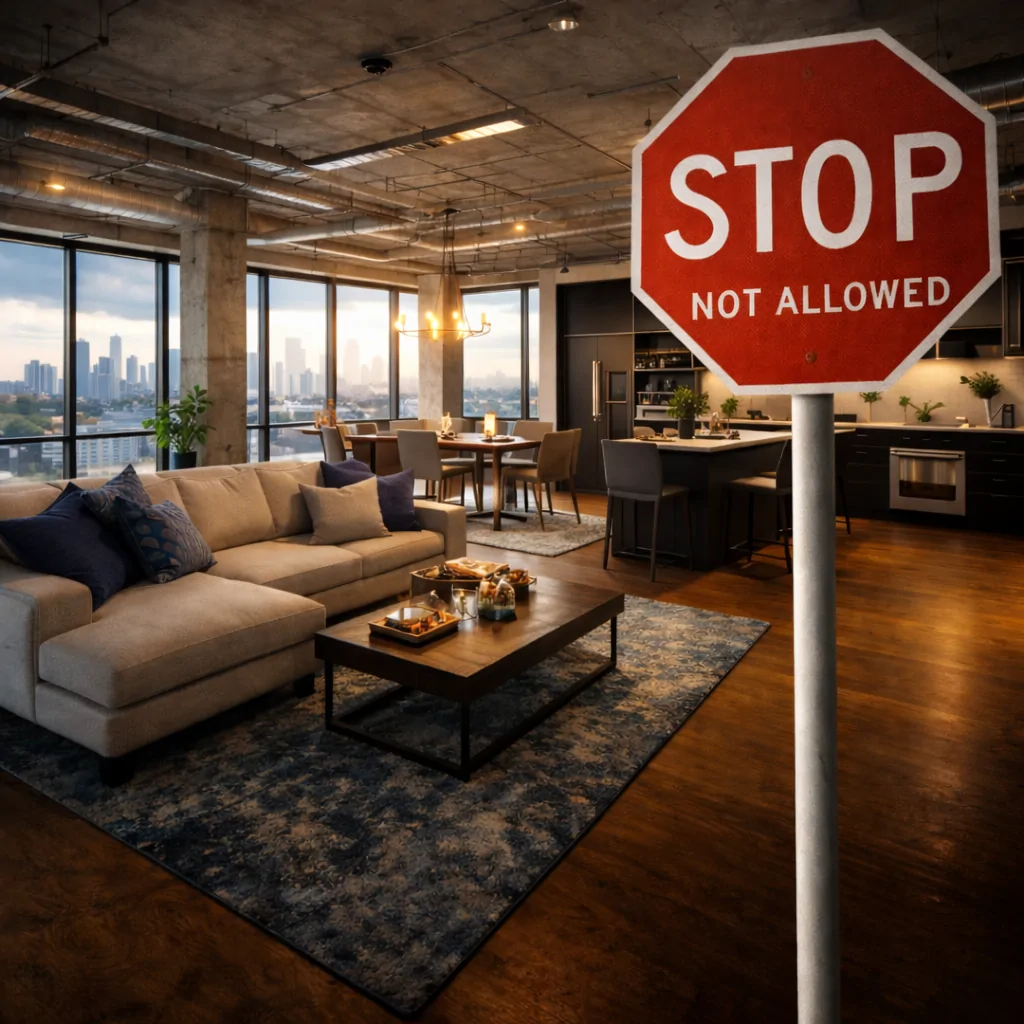
But the government won’t allow it.
Zoning codes, building regulations, occupancy requirements— a labyrinth of rules that forbid you from such options.
Let grown adults decide for themselves. That’s how capitalism is supposed to work.
Nobody would pay $400,000 for a unit with no bathroom. But $13,000? For a lot of Americans, that’s not a sacrifice— it’s an opportunity.
The same politicians who claim to care about the poor, the homeless, and young people priced out of the American Dream have the obvious solution sitting right in front of them.
But they won’t take it, because that would mean getting out of the way.