The Debt, the AI Bubble, and Strategy’s Liquidity Crisis… It’s All Connected

Play Video

Peter Schiff argues that the U.S. debt load, a record bond sell-off, and a frothy AI-driven capital spending boom are all part of the same problem, and that markets are pricing in fantasies about the Iran war ending and Fed policy. In this episode, he contends that the bubble will be pricked by rising interest rates, and that Strategy’s (MSTR) recent debt buyback reveals a company under strain rather than a financial masterstroke.

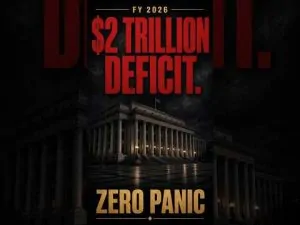
On rates and debt, Peter Schiff notes that the 10-year Treasury yield sat near 4.5% and the 30-year near 5.03%, with yields staying elevated even as oil fell on peace-deal optimism. He argues the real driver is the debt itself: roughly one-third of the nearly $40 trillion national debt matures within a year, forcing the government to roll over around $13 trillion plus about $3 trillion in new borrowing. He also says the Fed faces a bind, since cutting short-term rates risks spooking long-term bond markets, while holding or raising rates makes refinancing more expensive.

Peter Schiff also questions the AI boom, pointing to roughly $1 trillion in annual hyperscaler capital spending on equipment that may become obsolete within five or six years. He suggests part of this funding comes from layoffs and underinvestment in factories, and argues that the stock market’s record highs mirror those seen under the Biden administration, indicating cheap credit and inflation rather than genuine economic strength.

Turning to Strategy, Peter Schiff argues that the company’s decision to repurchase 0% convertible notes at 92 cents on the dollar was not a financial triumph. He says the discount merely matched the notes’ present value, and that the move drained more than 60% of the liquidity meant to cover Stretch preferred dividends, suggesting pressure behind the scenes. He expects Bitcoin to be hit by a stock market correction and by rising gold prices, and he pitches gold and mining stocks as better alternatives.

Key takeaways

  • Peter Schiff says bond yields remain elevated because of debt levels and weakening foreign demand, not just the Iran war.
  • About one-third of the roughly $40 trillion national debt matures within a year, requiring massive refinancing.
  • Peter Schiff warns the Fed faces a no-win choice between cutting rates and spooking bond markets, or holding rates and squeezing the government.
  • He argues the AI capital spending boom may rest on obsolescence-prone equipment, funded partly by layoffs.
  • Peter Schiff views Strategy’s early debt buyback as a sign of liquidity strain, not a clever arbitrage.
  • He predicts Bitcoin will fall in a stock correction and as gold resumes its uptrend, favoring gold and mining stocks.

The US needs to borrow $20 trillion this year. Saylor just blew 60% of his cash paying off 0% debt early. The dominoes are falling.
This episode is sponsored by Rockwell Automation. Download their 11th Annual State of Smart Manufacturing Report at
This episode is also sponsored by Ethos. Protect your family with life insurance from Ethos. Get up to $3 million in coverage in as little as 10 minutes at Application times may vary. Rates may vary.
Watch my recent mini-documentary about IRS corruption I uncovered from FOIA records:
Donald Trump spent Memorial Day weekend claiming an Iran deal was 90% done — oil dropped $10 to below $90, but bond yields barely moved, with the 10-year still at 4.5% and the 30-year above 5%. Peter Schiff argues the bond market is telling the real story: with $13 trillion in debt maturing this year plus $3 trillion in new borrowing, the US needs to convince creditors to roll over nearly $20 trillion — an amount without historical precedent.
The AI CapEx bubble is now consuming a trillion dollars a year, funded by layoffs and foregone investment in actual manufacturing. Schiff compares it to dot-com: the technology is real but the stocks are wildly overvalued and most will go to zero when rising interest rates prick the bubble. Meanwhile, Michael Saylor burned over 60% of Strategy’s cash reserves paying off zero-interest convertible notes three years early — a move Schiff says was forced by behind-the-scenes pressure, not financial genius. Elizabeth Warren accidentally made the best case against payroll taxes by pointing out that companies are incentivized to replace workers with AI because hiring people is taxed while buying computers isn’t — though her solution is more taxes, not fewer.
Chapters:
00:00 – Intro
00:53 – Iran War & Market Reaction
06:47 – Bond Market & The Debt Crisis
14:25 – Ad Break: Ethos
15:47 – The AI CapEx Bubble
26:23 – Gold, Silver & Mining Stocks
29:11 – IRS Lawsuit & Bank Documentary
32:12 – Ad Break: Rockwell Automation
33:35 – Elizabeth Warren’s AI Tax Proposal
47:28 – Strategy, Bitcoin & The Coming Bust
57:25 – Tokenized Gold vs Bitcoin
58:42 – Summer Sign-Off & 250th Anniversary
Follow @peterschiff
X:
Instagram:
TikTok:
Facebook:
Free Reports & Market Updates:
Book Store:
Sign up for Peter’s most valuable insights at
Schiff Gold News:
#PeterSchiffShow #DebtCrisis #GoldInvesting


Stay in the loop

Get our new videos delivered Straight to your inbox, right as we publish them...