
British Petroleum announced this week that ALL 6,500 employees in its London office will be working from home within the next two years.
BP is even going to shut down the office entirely and sell the building. They’re not the only ones.
Right now, in fact, only 13% of London office workers are back at the office. And as we’ve been saying, many likely won’t return.
When you never have to go to the office anymore, why stay in expensive London? Or New York, or San Francisco for that matter?
A lot of people are already moving.
I’ve been driving across the northern United States for the past few days– Idaho, Montana, and Wyoming. ‘Rural’ doesn’t even begin to capture the scene here. It’s gorgeous.
And it’s been remarkable to see how many people are moving to these areas from big cities (especially from California).
Even more, as we’ve been suggesting, a lot of folks will pick up and go farther afield, leaving their home countries altogether.
That’s one of the silver linings of COVID: the work-from-home revolution allows a lot of people to go anywhere, for any reason– perhaps to dodge the chaos, for better weather, a different lifestyle, tax savings, or all of the above.
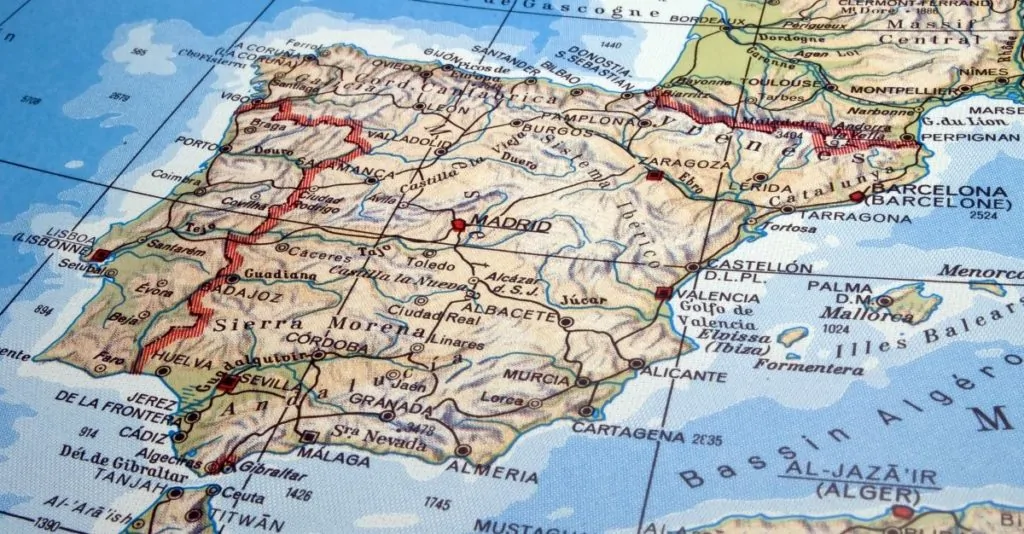
Two places to consider are Spain and Portugal; both have very straightforward options for people who might want to live there (even just temporarily) to obtain legal residency.
In short, you’ll need to demonstrate that you have sufficient cash, liquid assets and/or monthly income so that you won’t become a burden to local welfare programs.
Portugal’s D7 visa requirements, for example, are based on the current minimum wage.
So if you have an income or cash savings of at least €7,620 (the annual minimum wage in Portugal, roughly USD $9,000), you can receive a temporary residency permit that’s valid for 1 year.
If you bring your spouse, you’d need an additional 50% of that amount, plus 30% for each child.
So a family of four would need about $18,000.
(This is the bare minimum, and of course it’s always best to show more if possible when you submit your application.)
And to be clear, this is YOUR money. It’s not like you have to pay it to the government as a fee or anything. You keep it in your bank account, and spend it as you see fit. The Portuguese government just needs to know that you have (or earn) enough to support yourself.
Spain has a type of visa that is very similar to Portugal’s D7. It’s called “residencia no lucrativa” or “non-lucrative residency.”
Spain is more demanding when it comes to showing savings or income, but their requirements are not outrageous.
This required amount increases slightly each year, depending on the Spanish minimum wage.
As of 2020, they want to see that the primary applicant has €25,560, and an additional €6,390 for each additional family member.
So, a family of four would need to show a minimum €44,730 of savings to qualify for residency in Spain (or almost $50,000).
Spain and Portugal are just two drops in an ocean of options. Both are really nice (in fact, our own Sovereign Woman is currently in Portugal meeting with lawyers and real estate agents.)
Digital Nomads in particular may be drawn to Spain and Portugal– especially Lisbon and Barcelona. Those cities have vibrant entrepreneur communities, high quality local workers, excellent nonstop flight networks, great weather, and cheap living costs.
There are undoubtedly millions of people around the world who are thinking about their next steps right now.
Everyone’s life has changed. And a lot of people are starting to realize that they have much more control over their own lives– including the freedom to choose where to live– for the first time ever.
This ought to be a deliberate decision. There are countless places around the world to choose from. And you can decide for yourself what’s important… what matters to you… and start crafting exactly the life you want to live.