One of the most humiliating episodes in Chinese history came in April 1895 after China lost the Sino-Japanese war.
Japanese negotiators forced their Chinese counterparts to pay out the nose— one of the heaviest war indemnities of all time; it totaled 38 million British pounds, roughly three times what the Japanese government spent in a year. Today that would be roughly $2.2 TRILLION.
Japan’s finance minister, Matsukata Masayoshi, insisted on being paid in gold-backed currency in London, simply because he knew that his British pounds could be converted into gold.
At the time, Japan was happy to keep such a vast sum in London. While US GDP had technically eclipsed Britain’s, London was still the center of global finance and had the most advanced banking system on the planet.
Not to mention, the pound was the world’s most trusted currency. And British gold was protected by British guns, British ships, and the English Channel— something that nobody had dared to cross since William the Conqueror in 1066.
It was one of the first times a sovereign nation chose to keep its financial reserves in another country; prior to that, most countries naturally held their national treasure at home.
But this trend of trusting another country to store their wealth kicked into high gear after Hitler came to power in the 1930s. European governments shipped more and more of their gold to Britain, and then across the Atlantic to America, to keep it out of Nazi hands.
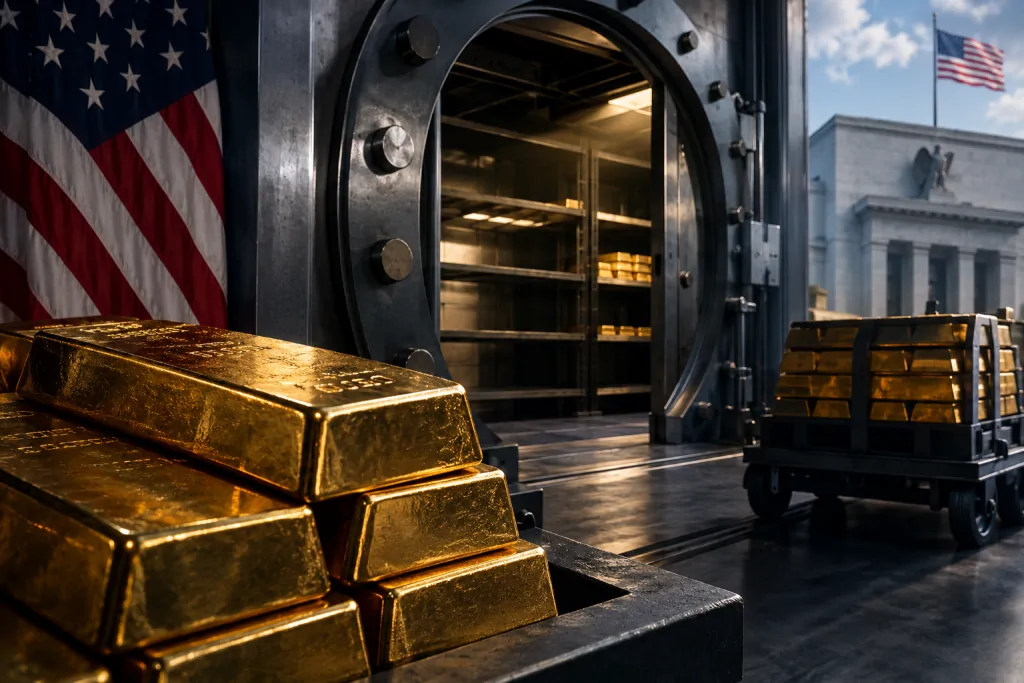
By the end of WW2, the Federal Reserve’s vault in New York held nearly 4,000 tons of gold for foreign governments… worth more than half a trillion dollars today.
The United States was the undisputed global superpower after the war, plus the dollar had been crowned the world’s reserve currency. So most countries opted to leave their gold where it was in America.
And the US remained a safe custodian of foreign gold for more than 80 years.
But that’s starting to change: foreign governments are pulling their gold out.
It didn’t begin this year; Germany pulled 300 tons out of New York a decade ago. But two of America’s closest allies have followed in the past year alone.
This year France pulled out the roughly 130 tons it had kept in the Fed’s vault. And last month the Dutch central bank announced it had moved 86 tons.
Technically neither France or the Netherlands bothered shipping their gold; they simply liquidated their holdings in the US and then repurchased new gold at home. But the effect is the same— they took their assets out of America.
And just as it wasn’t hard to understand why gold flocked to America in the 1930s, it’s not hard to understand why it’s leaving America in the 2020s.
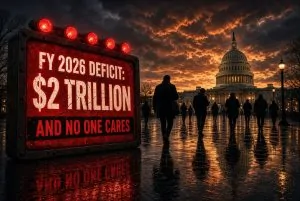
America is no longer the trusted partner it used to be, and the financial risk is enormous: $40 trillion in debt, $2 trillion deficits, and a Congress that can’t manage to pass a budget. The country is bitterly divided, and none of it seems to be getting any better.
But this isn’t just about gold; foreign governments and central banks have also been cutting their holdings of US government debt. China alone has cut its Treasury holdings by about 15% in a year.
Fifteen years ago foreigners owned nearly half of all Treasury bonds in investors’ hands; today they hold less than a third.
This is really all the same trend— foreign countries are losing confidence in the United States.
Here’s another sign: not only are they moving their gold and dumping Treasury bonds, they’re actually buying more gold, even at $4,000+ per ounce.
Foreign central banks bought nearly 40 tons in August, and China’s central bank bought 23 tons in September— its biggest month in nearly three years.
Gold is the easiest way for them to diversify out of the US dollar and into an asset that is universally recognized as a strategic financial reserve. Unlike dollars or euros or renminbi, no government controls gold. They don’t have to trust in another country’s goodwill and fidelity.
For literally thousands of years, countries generally did not trust one another with their wealth and financial reserves. This tradition shifted in the 20th century as the UK, and then the US, became the trusted custodian of foreign assets.
We are witnessing a sudden reversal of that shift in real time as countries are once again taking control and repatriating their national wealth.
Unless the US very suddenly reverses course, starts cooperating with its allies, and takes its deficit seriously, this trend is almost certain to continue.
It’s not an especially positive trend. But it is the reality we’re living in, and it’s important to be intellectually honest about that.
It’s also important to understand that some of the biggest beneficiaries will be the companies that produce gold.
And owning a piece of those companies yourself is a great way to protect yourself from higher prices and inflation.
P.S. Schiff Sovereign’s investment research newsletter, Strategic Assets, exists to find exactly those companies: businesses that are already profitable, carry little or no debt, and trade cheap against the cash they generate.
Our approach has locked in gains of more than 10x on a small silver producer, with average gains of about 75%. Right now we’re giving away a free sample issue so you can see what’s inside. Click here to download yours now.