Last week, Treasury Secretary Scott Bessent sat down for a fireside chat at Southern Methodist University in Dallas and told the room what the plan is for the national debt.
“We don’t have a revenue problem,” he said. “We have a spending problem.” Contain the spending, add 3% growth, and America can “grow our way out of this.”
That’s a nice idea… and, it’s possible. The key part there is the spending freeze: arrest the growth in federal spending, and the deficit will eventually melt away.
The problem, of course, is that Congress won’t even cut obvious fraud. So I don’t think taxpayers should hold their breath for sudden fiscal responsibility.
The growth side of his approach is feasible. But what does “grow our way out” of the debt actually mean?
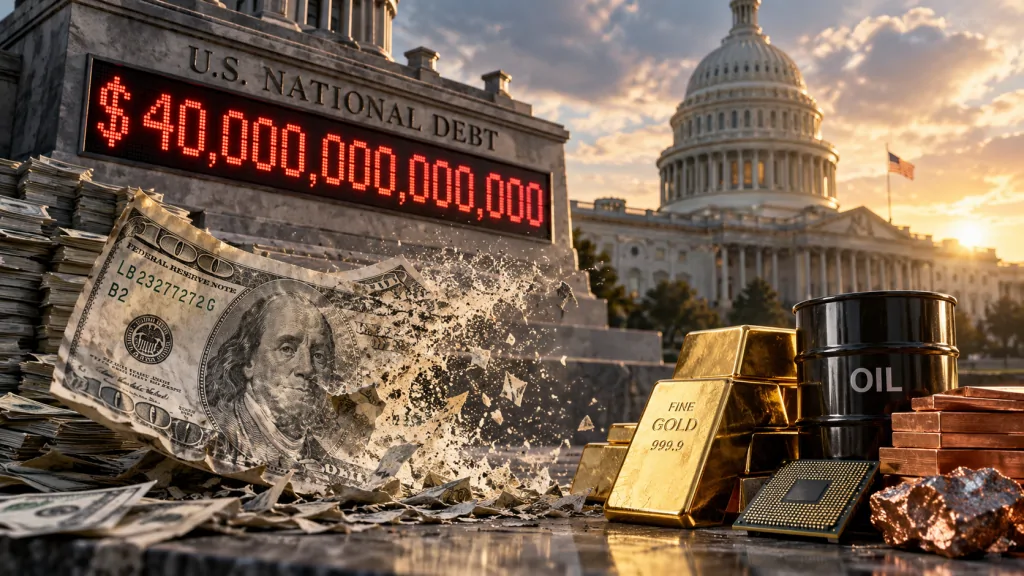
The national debt is now a little over $40 trillion. Meanwhile the entire US economy— everything produced by every business and every worker in the country over a full year— is about $32.5 trillion.
This means the debt is 123% of GDP, i.e. the all-important debt-to-GDP ratio is 123%.
That ratio is the key indicator that bond investors watch. And it’s the number Secretary Bessent is talking about when he says the US can grow its way out of debt.
The whole point is to bring that percentage down, from 123% today to something more like 80% or 90%.
Notice what he did NOT say. He didn’t say the debt would shrink. He didn’t say the deficit would go away. Growing your way out means the debt keeps getting bigger… it just grows at a slower pace, while the economy grows at a much more rapid pace.
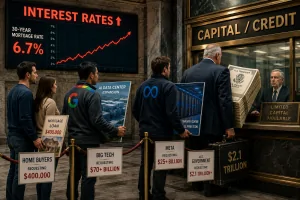
Specifically, the US national debt has been growing at an average 6.7% per year over the past few years… which means ‘growing our way out’ will require the US economy to expand by at LEAST 7% per year, just to make a dent in the debt-to-GDP ratio.
Now go back to Bessent’s number: he’s talking about 3% growth.
And when he says 3%, he means real growth, i.e. the economy producing 3% more goods and services than it did the year before. That means more cars, more houses, more software, more oil… more actual stuff.
But we just established that the economy will require 7% growth in order to fix the debt challenge.
So where, exactly, is the other 4% supposed to come from?
It comes from inflation. In short the economy produces 3% more stuff, but the stuff costs 4% more. In total that gets you to more or less 7% GDP growth, while the debt increases by 6.7%.
And with that, you have a tiny improvement to America’s dismal debt-to-GDP ratio.
This is already the path that they’re on; in the last year, America’s total (i.e. nominal) GDP growth was 6.5%. Of that, only 2% was real growth, i.e. the production of more goods and services.
The rest, about 4.5%, was from rising prices.
So “growing our way out” is really just a polite way of saying inflation. And the government is effectively telegraphing a 4% inflation target. As it happens, that’s about where inflation already is right now.
In other words, the plan is to make everything else more expensive faster than the debt grows, and to call that a fix.
Four percent a year doesn’t sound like much. But it compounds, and at that rate a dollar loses about a third of its purchasing power in ten years.
The solution is to own the stuff they can’t conjure out of thin air.
A government can print money by the trillion, but it can’t print an ounce of gold or a barrel of oil, or anything else that’s real or critical to the economy.
That’s why real assets tend to hold their value when the currency is losing value… and why the businesses that produce those assets— gold miners, energy companies, copper producers, chip makers, etc.— often do spectacularly well.
P.S. Real assets are the whole premise of Schiff Sovereign’s investment research newsletter, Strategic Assets: profitable, well-run companies that produce the things a government can’t print, researched while they’re still cheap.
We locked in gains of more than 10x on a small silver producer we featured last year, and a gold producer has gone up 5x yet still trades cheaper against its earnings than the day we wrote it up. Two oil tanker owners we covered when nobody wanted them are up more than 150% and 110%.
The subscription comes with a 30-day money-back guarantee. You can learn more about Strategic Assets here.