
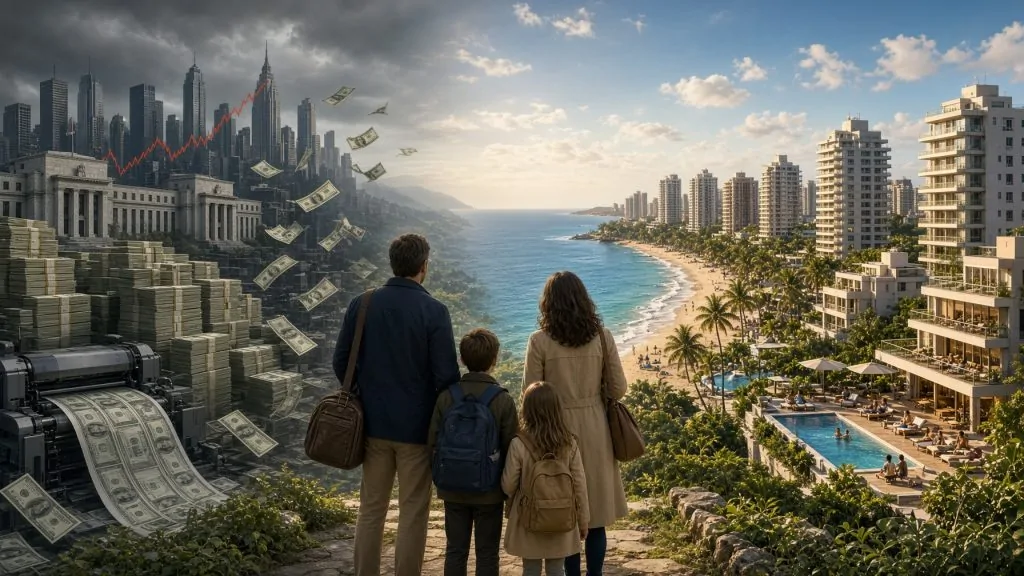
For a lot of Americans, the beachfront condo has become unattainable.
In Naples, Florida, the median beachfront condo on the market is listed at about $2 million. And that’s before factoring in condo fees and skyrocketing insurance costs.
Now compare that to an apartment we found during research for members of our flagship service, Plan B Confidential, in João Pessoa, a midsize beach city on Brazil’s northeast coast.
The apartment has four bedrooms, nearly 2,000 square feet, and three parking spaces. It’s in Cabo Branco, the prime beach address in town, a hundred meters from the water… and the building has a pool, a sauna, and only two apartments per floor.
The asking price was about $230,000. That’s less than $120 a square foot, plus condo fees of less than $300 per month.
The beachfront condos in Naples cost about FIFTEEN times as much per square foot.
And the Brazilian apartment comes with something no Florida condo can offer: buying it qualifies you for a backup residency, i.e., the legal right to live in Brazil if you ever need to.
Brazil lets foreigners apply for residency by buying property. In most of the country the property has to be worth at least $200,000 or so.
But Brazil’s government wants investment in the poorer north and northeast, so the minimum there drops to about $140,000. João Pessoa is in the northeast, which means that four-bedroom qualifies with room to spare.
The residency permit runs for four years, and after that you can apply to make it permanent. To keep the residency, you hold onto the apartment and spend two weeks in Brazil every two years.
And while you hold it, you can rent it out, potentially paying for your own backup residency and vacation home abroad. Average rental yields in Brazil are around 6%, and in an upcoming report on Brazilian real estate, we break that down further by region.
Argentina and Mexico offer the same kind of value. Our Argentina report found a two-bedroom in Caballito, a central, residential neighborhood of Buenos Aires, listed at $169,000, or about $165 a square foot.
In Mexico, our report highlighted Playacar, a quiet neighborhood on a golf course next to the center of Playa del Carmen. The two-bedroom condo we found there is on the ground floor and comes fully furnished, with a big terrace beside the pool.
The asking price works out to about $220,000 at today’s exchange rate, or roughly $170 a square foot. That’s more than Buenos Aires, but cheap next to anything on an American beach.
(Listings come and go, so treat these as examples of what the money buys.)
While things are good, foreign real estate could simply be a vacation home you visit once a year that generates rental income while you’re away.
Two-bedrooms in Playacar rent long-term for about $1,100 to $1,400 a month. Over a year, that’s a gross yield of maybe 5 to 7% of what you paid, before expenses.
In Argentina, renting out an apartment makes sense again. For years the law forced landlords into three-year contracts and restricted how much they could raise the rent.
Then President Javier Milei scrapped those rules at the end of 2023, and within six months rental listings in Buenos Aires rose more than 170%.
Residency in Argentina and Mexico is even easier than in Brazil, because you don’t need the apartment at all.
In Mexico, you only need to prove that your income or savings meets a modest threshold; right now about $75,000.
Argentina gives residency to foreigners who can show steady passive income from outside the country— dividends, interest, rent, etc. Lawyers there tell clients to show about $2,000 a month for best chances of approval.
Bear in mind that neither government takes the money. You show it and you keep it… and you could hold either residency without owning a thing in the country.
But for the value, owning real estate there might be part of your Plan B anyway.
So in all three countries you end up with a legal right to live there and a cheap place to go that pays rent until you need it.
The logic is simple. If you live, work, invest, and have everything you hold dear in one jurisdiction (which happens to be the most indebted government in the history of the world), that’s a significant risk.
The US government is $40 trillion in debt, Congress won’t cut anything, and the difference gets covered by printing money, which drains the value of your savings. Moving some savings into stronger jurisdictions, establishing a second residency, and taking every legal step to cut your tax bill all mean that no single government’s incompetence has total claim over your life.
That’s what a Plan B is.
And the thing that finally gets you to go might be nothing more dramatic than a cheaper life. When our team went through João Pessoa earlier this year, a 25-minute Uber ride cost about $5, and a steak dinner at a decent restaurant ran about $25.
None of this is radical. It’s not about fleeing. It’s about having the option to go somewhere you actually enjoy— somewhere you might already vacation— and having the legal right to stay there indefinitely if you ever need to.
P.S. The Brazil, Argentina, and Mexico apartments in this article came out of country reports we published this year in Plan B Confidential. We regularly publish these types of reports that go neighborhood by neighborhood with listings, rents and agents, and they spell out what each residency requires, step by step.