In 2012, a 76-year-old Vietnam veteran named Jerry Meekins bought a $197 Spirit Airlines ticket to Atlantic City to visit his daughter.
Then his doctor told him two things: he had terminal cancer, and he could not fly. Meekins asked for his money back. Spirit said no.
He offered a letter from his oncologist, hospice paperwork, even his prepaid funeral package. Spirit wouldn’t look. CEO Ben Baldanza publicly blamed the dying man for not buying travel insurance. A week of national outrage later, Baldanza caved and refunded the fare himself.
It was not out of character. Five years earlier, Baldanza hit reply-all on a complaint from a passenger whose delayed flight cost him the concert he was flying to see. “We owe him nothing as far as I’m concerned,” the CEO wrote. “Let him tell the world how bad we are. He’s never flown us before anyway and will be back when we save him a penny.”
That was Spirit’s business model: treat customers like garbage and bet they’ll crawl back for a penny. Unsurprisingly, they went bankrupt.
Rule #1 in business is ‘the customer is always right’. At a minimum, businesses know that they need to treat paying customers with basic courtesy. Duh.
But governments never learn that lesson; they don’t have to extend any courtesy because they take your money at the point of a gun.
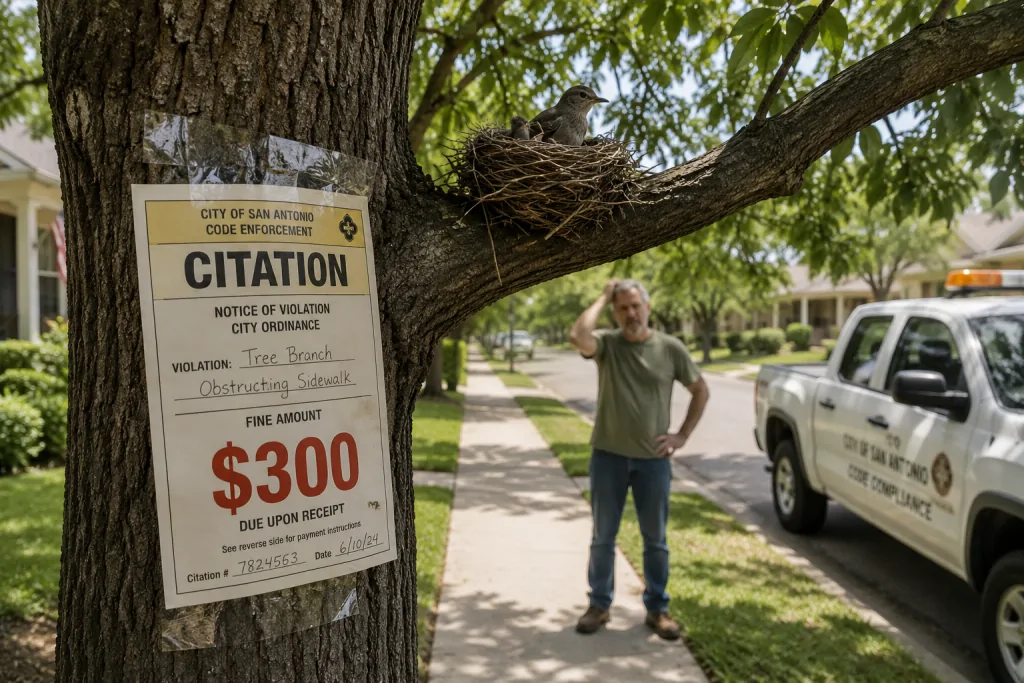
Rob Streeper has lived in his San Antonio home for 18 years. In June, the city’s code enforcement office sent him a notice of violation because a tree on his property had a branch that was hanging too low over the public sidewalk.
Fair enough. Keeping the sidewalks passable is all part of the mundane administrivia of municipal government. But there was just one problem: a bird was nesting on that particular branch of Mr. Streeper’s tree.
Streeper is apparently a staunch rule follower, because he called the US Fish and Wildlife Service to ask what to do. A federal agent told him that removing an active nest violates the Migratory Bird Treaty Act of 1918, which carries up to six months in prison and a $15,000 fine.
In other words, the local government was threatening to fine him for failing to commit a federal crime. And he pays taxes to fund both his city council as well as the US Fish and Wildlife Service.
Streeper reported this back to the city, and even made clear that once nesting season ends, “we have no problem with cutting the branch.”
None of it mattered. Two months later, a $300 citation appeared. “Nobody talked to us,” he said. “They just taped it to the door.”
Eventually a code enforcement officer told him what was really going on: a neighbor had been calling the city every single day to complain about the branch.
From a bureaucrat’s perspective, the path of least resistance was to simply issue the fine, and ignore the injustice of it. After all, the bureaucrat wouldn’t suffer for any of it.
And at no point in this story does a judge or jury appear. Streeper could have technically contested the ticket in municipal court, and a jury of random strangers would have sided with him in a heartbeat. But that means a court date, days off work, and more weeks of the machine, all over a $300 ticket that should never have existed.
In many respects the process IS the punishment. The government never needs to be right— but it is more expensive to fight them than to obey them.
What finally fixed it was a TV camera. On August 14 at 10:59 a.m., one minute before a KSAT 12 news crew pulled up to the house, Streeper’s phone rang. It was a city official named Michael Uresti, calling to say the matter had “reached my level.”
The ticket was dismissed, the branch received a stay of execution (until late September), and the common sense that went missing for two months turned up in sixty seconds.
“It took telling the code compliance people that [local news crews] were involved for them to finally back off,” Streeper said.
Until then, not a single bureaucrat who touched this case felt compelled to stop it.
This is how the whole system works. In 2021, for example, the Biden administration ordered its contractors to vaccinate their employees, while Texas banned employers from mandating vaccines at all.
Companies faced an impossible choice: break state law, or lose their federal contracts. It took lawsuits from 26 states and a federal injunction to sort out the mess.
Or ask Mike and Chantell Sackett, who bought a $23,000 lot in Idaho and started building a home. The EPA showed up, declared their land a federally protected wetland, and threatened penalties of over $40,000 per day.
Better yet, the agency insisted no court in America even had the power to review its order. The Sacketts needed sixteen years and two unanimous Supreme Court decisions to win— the first just to establish their right to be heard at all.
And those were the lucky ones. The contractors had 26 state attorneys general. The Sacketts had a public-interest law firm and sixteen years of patience. Streeper had a news crew.
But if you don’t have lawyers, politicians, or cameras on your side, you just get pummeled by the system.
That’s what happens when there are so many rules, so many agencies, and so many levels of government. Compliance with the law becomes impossible.
Meanwhile, government doesn’t uphold its end of the bargain. It can’t be bothered to stop the riot outside a citizen’s house or clear the drug pushers from his sidewalk. But bureaucrats will happily wreck someone’s life over an errant tree branch.
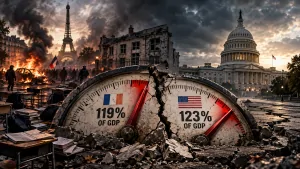
And the tree branch is the smallest version of the story. The Federal Reserve destroyed a quarter of the dollar’s value in five years. Congress ran the national debt to $40 trillion while letting Social Security race toward insolvency.
Nobody has answered for any of this incompetence, and nobody ever will. The consequences and penalties are reserved for a man with a bird’s nest in his tree.
A government that does this has lost its way, lost its moral compass.
This is simply not how you treat anyone, let alone your own citizens. And it is not what a functioning free society looks like.