
[Editor’s note: This letter was written by Schiff Sovereign’s CEO, Viktorija]
Picture the kind of life that, in the West, only the genuinely rich can afford: a full-time housekeeper who cooks and cleans, a concierge doctor you text with directly whenever you need, dinner out with friends several times each week without even thinking about splitting the bill, and a modern condo with pool, gym, and security.
That would easily run $20,000+ per month in the US. The live-in help alone puts it out of reach for most people.
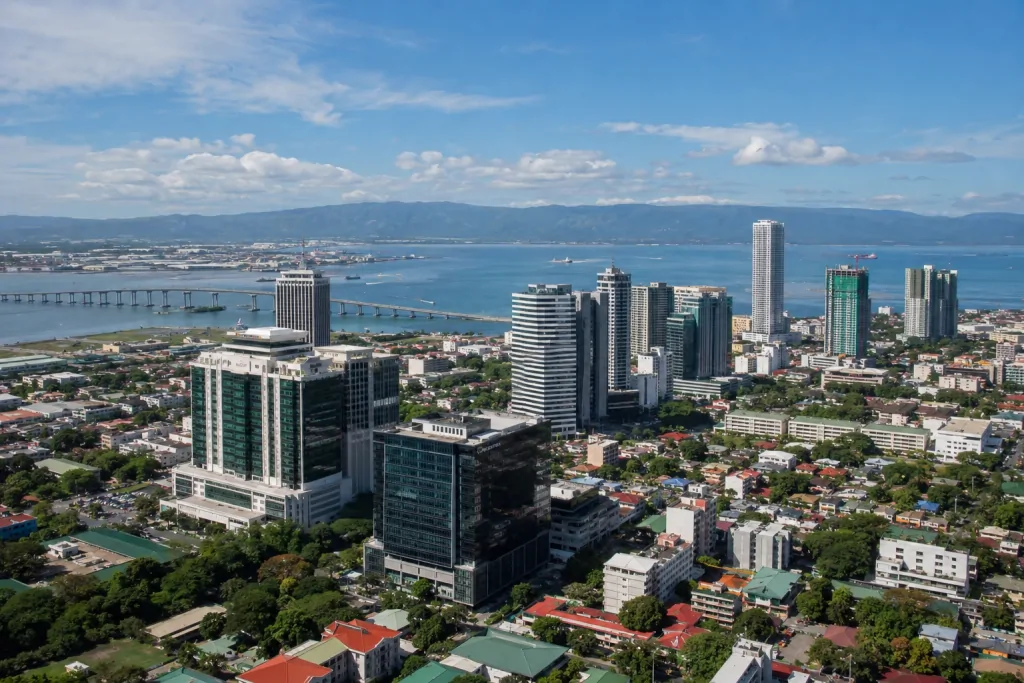
But in Cebu, a coastal city in the Philippines, all of that costs about $3,000 a month.
An ordinary Western middle-class income (even lower middle class) unlocks a lifestyle that looks posh back home.
But cheap is not what makes the Philippines interesting. Plenty of places are cheap. What sets it apart is that it may be the easiest place in Asia for a Westerner to actually live.
Start with the language. English is not a tourist-zone courtesy in the Philippines; it is an official language, used in government, courts, contracts, banks, hospitals, universities, and street signage. Your doctor speaks English. Your lawyer drafts documents in English.
No other major Asian country comes close, and for a retiree or a family building a second base, that changes everything about daily life.
Then there is the familiarity. Spain ruled the islands for more than three centuries and left behind Catholicism, Spanish surnames, town plazas, and a warm, family-centered social culture that feels closer to Latin America than to the rest of Asia.
Then the Americans took over; the Philippines was US territory from 1898 until independence in 1946, which left behind English-language schools, American-style institutions, basketball, and a general comfort with Westerners you will not find in Japan or China.
You can walk through Cebu and pass a Catholic church, a US-style mall, a fresh seafood market, and a group of schoolkids chatting in English, all in the same afternoon.
A comfortable two-bedroom condo in Cebu runs around $450/month.
A couple can live well on $2,500 to $3,500 a month, while retired couples in smaller cities often do it on just $2,000. A private doctor visit costs $10 to $25, a dental cleaning $15 to $30.
The tax picture is friendlier than most people expect too. Foreigners who become Philippine tax residents are generally taxed only on income earned inside the Philippines. A British retiree on a UK pension or a Canadian drawing retirement income will likely owe the Philippines nothing.
The same is true for Americans; the Philippines will not touch their income earned outside of the Philippines. The catch for Americans, of course, is that Uncle Sam taxes citizens on their worldwide income wherever they live.
(Those with earned income can use the Foreign Earned Income Exclusion to shield the first $132,900 of it, but the US tax and reporting obligations follow you regardless.)
What turns all of this from a pleasant vacation into a real Plan B is the residency, which is genuinely easy to get and even easier to keep.
The Philippines’ famous retirement visa has been running since 1985, and despite the name you do not need a pension or to be retired; anyone 40 or older can qualify by placing a refundable deposit in a Philippine bank.
There is no minimum stay requirement at all, so you can hold the residency for life while living somewhere else entirely, visiting when you like, and paying a modest annual fee to keep it current.
To be clear, the Philippines has real trade-offs. Foreigners can own condominium units but can never own land directly. Infrastructure outside the main hubs is uneven, typhoons are a fact of life, and the bureaucracy moves at island speed.
And the Philippine passport is weak enough that citizenship is not worth chasing; this is a residency play, not a passport play.
But that is exactly what a Plan B is. It does not require you to move anywhere; it requires securing the legal right to live somewhere you would actually enjoy, before you need it.
In case the comfortable Western life continues drifting out of reach, with housing, healthcare, and help all rising faster than anyone can comprehend, it makes sense to consider potential options abroad.
On the other side of the world, a great life figures in to a below-average Western income, in English, with no winter.
Our flagship service, Plan B Confidential, just published a full report on the Philippines for members: where expats actually live (and the one region to approach with eyes open), realistic budgets, the healthcare and insurance setup, the tax rules for remote workers, the exact deposit tiers for the retirement visa, and what you can and cannot do with the deposit.
The Philippines is one option among many. Plan B Confidential’s research covers residency and citizenship pathways, offshore banking, and legal tax strategies across more than 120 countries, so you can shortlist the handful of places actually worth your time from your couch, before spending any real money on the ground.
If you’d like to see everything Plan B Confidential covers, you can learn more here.